MATTHEW BRANDON
I see across disciplines because I see beneath them.
HOW I SEE
I have always learned
by crossing boundaries.
ART is the eye.
BUSINESS is the system.
COMMUNICATIONS is the signal.
LIFE is the pattern.
I move through disciplines by listening for what they share. Beneath every field is a language. Beneath every language is a structure. Beneath every structure is a human need.
Design taught me form. Marketing taught me desire. Business taught me value. Communications taught me movement. Education taught me transformation.
AI makes those patterns more visible and more urgent. The question is no longer only what we can create. The deeper question is what we are becoming through the act of creation.
That is where I work:
perception, language, systems,
imagination, and change.
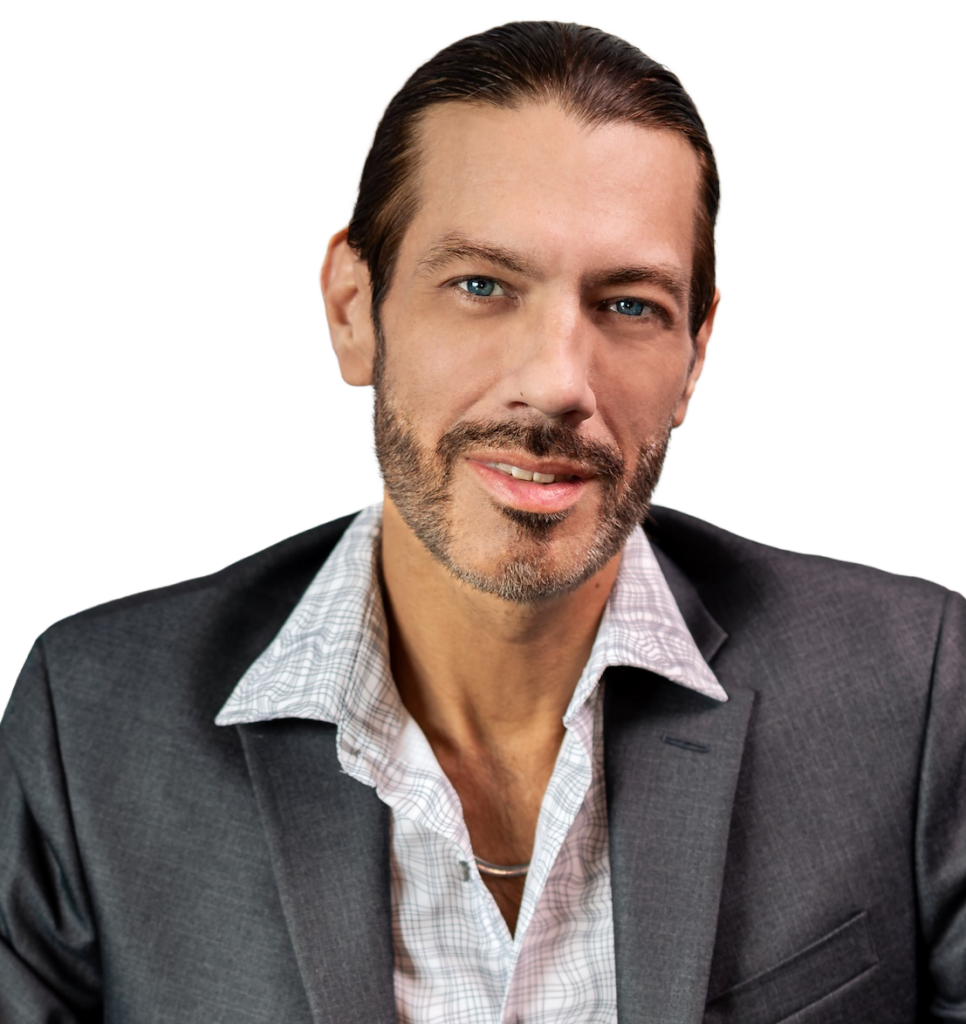
PLOT TWIST: The pattern became a book.
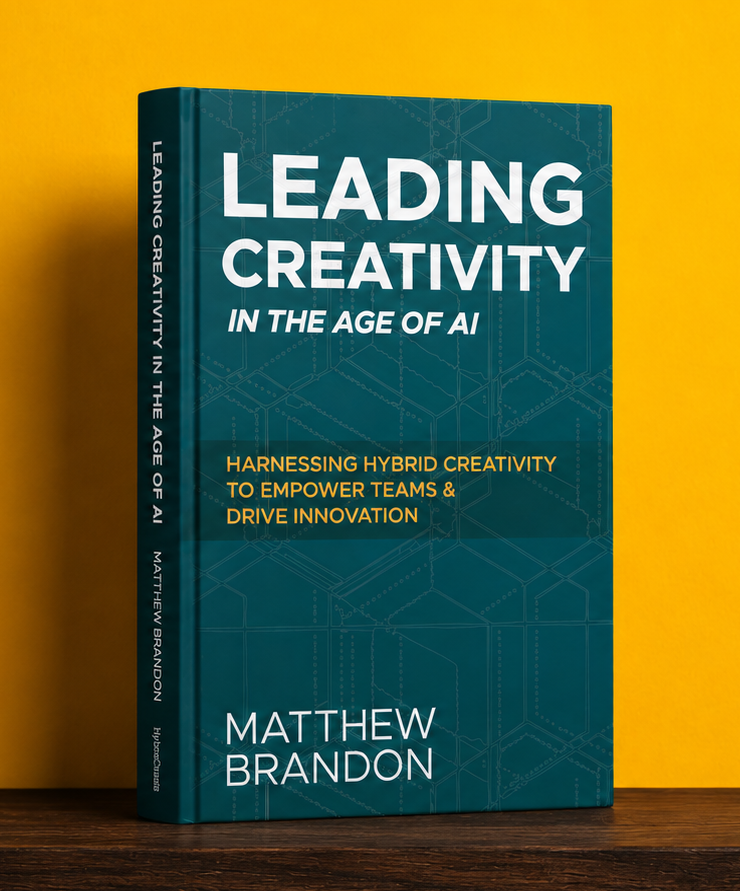
THE FIELD GUIDE
Leading Creativity
in the Age of AI
Harnessing Hybrid Creativity to Empower Teams & Drive Innovation
Some ideas stay in your head.
Some become frameworks.
Some keep expanding until they demand a spine.
Leading Creativity in the Age of AI is my field guide for creative leaders, teams, and institutions navigating a world shaped by AI, acceleration, ambiguity, and change.
It began with a simple belief:
AI can generate.
Humans must still judge.
The book explores hybrid creativity as a way of seeing, deciding, leading, and becoming. It connects human imagination with machine capability without surrendering taste, ethics, authorship, culture, or meaning.
The Hybrid Creativity Canon
Twelve Essays on Creative Leadership in the Age of AI
A twelve-part essay series extending the ideas behind Leading Creativity in the Age of AI. Each article examines one dimension of hybrid creativity: how leaders can preserve judgment, originality, ethics, and human meaning while working with increasingly intelligent tools.

The New Creative Leader
AI has changed the conditions, not the mission

Hybrid Creativity
Where human discernment meets machine intelligence
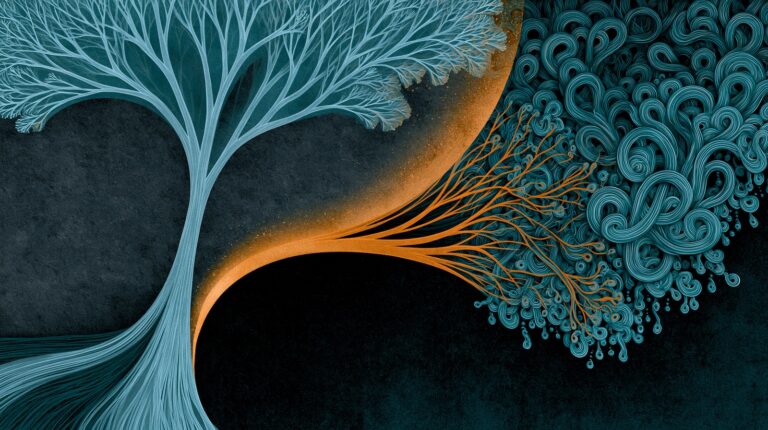
AI-Empowered Creatives
And AI-dependent operators

The Creative Eye Still Matters
Why taste cannot be automated

AI Is Not a Strategy
Leadership before tools
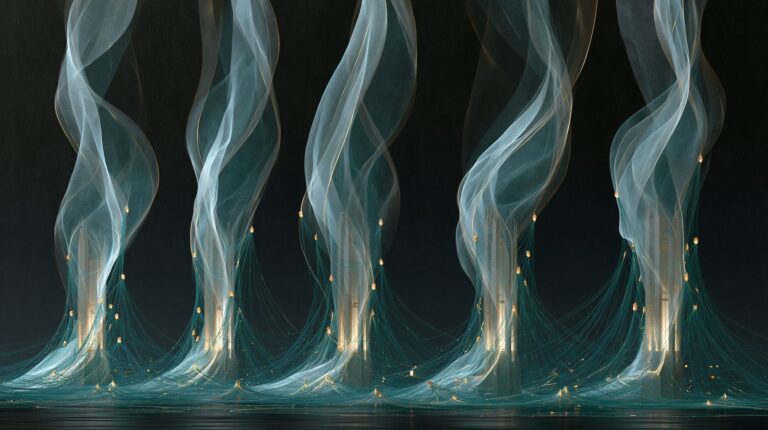
Hybrid Creative Leadership
A framework for the age of AI

The 90-Day Plan
AI adoption as leadership rhythm
Designing the Hybrid Team
Structure, trust, and creative judgment

Creative Workflows for the AI Era
Where AI belongs, and where it does not

AI Ethics Is Leadership
A creative skill, not a legal afterthought

Keeping Creative Teams Human
Under acceleration

Future-Proofing Creativity
The discipline of what comes next
OPERATING SYSTEM
I see the system.
I translate the complexity.
I design the meaning.
This is how I move from insight to impact. Across disciplines. Across roles. Across the spaces where creativity, strategy, and human judgment meet.
SEE
I look for the hidden architecture beneath visible problems: the patterns, incentives, signals, tensions, and relationships shaping what people notice—and what they miss.
PATTERNS. STRUCTURE. CLARITY.
TRANSLATE
I turn scattered information into language people can use. My work often begins where the problem is felt but not yet named.
CLARIFY. CONNECT. COMMUNICATE.
DESIGN
I help ideas, identities, institutions, and stories take form—not just as messages, but as systems of belief, behavior, and direction.
SHAPE. BUILD. BRING TO LIFE.
I operate at the intersection of imagination and intelligence—where systems are seen, complexity is translated, and meaning is designed.
The Work Beneath the Work
I Am Here to Give Form
to What Is Becoming
I am drawn to the unfinished edge of things.
The idea before it has language.
The person before they have claimed their shape.
The system before it finds coherence.
The image before it becomes visible.
The life before it becomes fully authored.
My work, my curiosity, and my creative life all return to the same central impulse: to recognize what is emerging and give it form with clarity, beauty, intelligence, and force.
I believe meaning is not found by accident. It is shaped through attention. It is refined through discipline. It is revealed through design, language, pattern, courage, and the willingness to look more deeply than the surface requires.
I am interested in transformation that is not loud for the sake of being seen, but unmistakable because it changes the field around it. A message becomes sharper. A room becomes more alive. A person becomes more honest. A team becomes more capable. An idea becomes strong enough to move through the world.
I want to build things that carry weight.
Not just beautiful things, though beauty matters.
Not just useful things, though usefulness matters.
Not just intelligent things, though intelligence matters.
I want to build work, language, systems, images, and experiences that help people feel the presence of possibility before they have fully named it for themselves.
That is the through-line.
HISTORY
The Origins of Matthew Brandon
Every place widened the frame. Every frame brought me closer to myself.
I was born into a traditional nuclear family along the Ohio River, in the beautiful mountains of wild and wonderful West Virginia.
I was the first son, first grandson, and first grandchild. One side of my family carried the discipline of military life. The other carried the grit of factory work. That was my first frame: place, family, history, expectation, and the quiet architecture of what life was supposed to look like.
At twelve, I moved to the outskirts of Northern Virginia. That is where I began learning how to observe before entering. I watched how people moved through rooms, how language revealed belonging, how difference could be sensed before it was named, and how identity often lived beneath the visible surface.
Richmond was the first great opening.
At VCU, I found art, design, independence, community, and permission. Academia, the gay community, and the creative environment gave me a new way to understand difference. It was not a liability. It was intelligence. It sharpened how I saw, how I listened, how I chose, and how I began to build a life that actually felt like mine.
Richmond became more than a city. It became part of my formation.
For thirteen years, the Fan, the Museum District, and Northside shaped me through brick sidewalks, old houses, galleries, studios, classrooms, offices, porches, creative friendships, institutional work, and the slow discovery of selfhood. Richmond has a genuine Virginia soul: cultured, layered, artistic, historic, intimate, and alive with restaurants, conversations, and corners that feel remembered.
My academic career began there and moved from the Art Foundation Program to the dean’s office, then into the systems of enrollment, access, communication, leadership, and student transformation.
Then Miami changed the light.
South Florida gave me another vocabulary: fluidity, heat, movement, mixture, glamour, contradiction, reinvention. Since 2011, Miami and the surrounding places I have called home—South Beach, Mid-Beach, Brickell, North Miami, and Fort Lauderdale—have expanded my sense of culture, identity, aesthetics, and possibility.
Miami’s Latin American pulse has rubbed off on me in all the best ways. I live for the palms, the frozen drinks, the croquetas, the medianoche at 3 a.m., the skyline, the humidity, the music, the international rhythm, and the feeling of being in an urban center that is always negotiating who it is becoming.
Across twenty-seven years in academia at VCUarts, the University of Miami, and FIU, my work kept moving between disciplines: art, design, business, communications, admissions, enrollment management, medicine, public health, research, and AI.
For a long time, it may have looked like many chapters. Now I see the convergence: every place gave me a language, every role gave me a system, and every transition brought the pattern closer to the surface.
The nexus did not begin with a project, a book, or a framework. It began much earlier—in the river, the room, the studio, the city, the classroom, the coast, and the quiet lifelong act of becoming more fully myself.
I was not leaving one life for another.
I was gathering the coordinates of one center.
THE STUDY
I kept learning new disciplines because each one gave me a better tool for seeing.
My education has never been about staying in one lane. It has been a way of collecting tools: drawing, making, building, managing, photographing, communicating, researching, and teaching.
Each experience gave me something practical. A way to make. A way to look. A way to organize. A way to communicate. A way to study the questions I could not stop following.
01
VCUarts taught me how to make things. Drawing, building, craft, critique, typography, materials, composition, and the discipline of turning an idea into an object all became part of my foundation. It taught me that creativity is not just inspiration. It is practice, revision, judgment, and attention to detail.
The MBA gave me a practical understanding of how organizations work. It taught me how ideas move through budgets, operations, strategy, leadership, timing, people, and decision-making. It helped me understand that creative work does not live outside business. It has to survive inside real systems, real constraints, and real human behavior.
03
Photography brought me back to looking. Thirty credits of advanced photography at the University of Miami deepened my relationship with light, framing, sequence, editing, composition, and visual discipline. Photography taught me to notice what enters the frame, what stays outside it, and how meaning changes depending on where the eye is asked to look.
04
Strategic communication gave me a wider view of how messages move. At FIU, I studied audience, culture, media, persuasion, identity, and global communication. It helped me connect design and language to larger questions of trust, interpretation, influence, and public meaning.
05
The doctorate turned instinct into research. My doctoral work studies creativity, generative AI, professional designers, motivation, adoption, and creative performance. It gave me a formal way to examine questions that had already been building across my life and career: how people create, how tools change the work, and how human judgment continues to matter.
The degrees may be maxed out. The learning is not.
I am still a student of life—of myself, of people, and of the world around me.
MY JOURNEY
How I Became an Author and Educator
Purpose changed the work.
I became a writer because I finally had something to say.
For much of my life, I was building toward this without fully naming it. Design taught me how to see. Communications taught me how meaning moves through people, institutions, and systems. Leadership taught me how much clarity matters when teams are navigating uncertainty. Graduate study gave me the discipline to examine ideas with greater rigor, and the Doctor of Business Administration program at Florida International University gave me the structure to bring my questions into sharper academic focus.
What changed was not my ambition. It was my alignment. I found the nexus between what I know, what I have lived, what I can teach, and where creative work is going next. Once that became clear, writing no longer felt separate from my professional life. It became one of its most natural extensions.
Becoming an author and educator did not feel like a reinvention. It felt like a convergence. The book, the research, the essays, and the frameworks are all part of the same larger movement: turning experience into language, language into structure, and structure into something others can use.
Today, I write to clarify. I teach to translate. I build frameworks to help others see what is emerging before it becomes obvious. My work draws from decades of creative leadership, design practice, communications strategy, organizational insight, and research into how artificial intelligence is reshaping creative performance.
I am not simply collecting knowledge. I am preparing to pass it on.
This is the work I am here to share—with students, creative teams, leaders, and the next generation of thinkers ready to build with purpose.
AI in the Creative Workflow
My DBA dissertation studied how professional designers use generative AI text-to-image tools and where those tools actually help the creative process.
Modeling the Relationship Between Generative Artificial Intelligence Engagement and Creative Performance: The Mediating Role of Intention to Use Artificial Intelligence in Professional Design Practice
AI appears most valuable when it helps designers explore more directions or remove repetitive work. It is less convincing as a replacement for human taste, authorship, polish, or satisfaction with the final creative process.
Core takeaway: Hybrid creativity works best when AI expands the field of possibilities and humans remain responsible for judgment, meaning, quality, and final creative direction.
AI helped designers expand early creative options.
AI was useful for reducing routine production burden.
Future-use intention was central to perceived AI value.
Human taste and final creative authority remained essential.
What the study examined
This dissertation examines how professional designers engage with generative AI text-to-image tools in creative work. The study separates AI use into three practical modes: AI for ideation, AI for iteration, and AI for task automation. These modes were tested in relation to designers’ intention to use AI and four perceived creative-performance outcomes: novelty, usefulness, aesthetic quality, and creative satisfaction.
The practical question behind the research is simple: where does AI actually help creative professionals, and where does human judgment still matter most?
AI for Ideation
Using AI to generate and explore early creative directions.
AI for Iteration
Using AI to test, revise, and refine creative alternatives.
AI for Task Automation
Using AI to reduce routine or repetitive production work.
Summary of findings
The findings suggest that AI adoption in professional design is selective rather than universal. AI for ideation and AI for task automation were the clearest predictors of intention to use AI. AI for iteration was positive, but it did not retain the same explanatory strength when the three AI engagement modes were considered together.
Intention to use AI emerged as one of the most important constructs in the study. Designers with stronger intention to use AI also reported stronger perceived AI-related gains across novelty, usefulness, aesthetic quality, and creative satisfaction.
The findings also show an important limitation. AI-assisted work was not rated as uniformly better than non-AI work. Designers saw practical value in AI, but remained more cautious about final polish, aesthetic quality, and satisfaction with the creative process.
Selective adoption
Designers responded most favorably when AI supported ideation or reduced routine production burden.
Intention matters
Designers who expected to keep using AI also perceived stronger creative-performance benefits.
Not a full replacement
AI-assisted work was not viewed as uniformly superior, especially around final polish and satisfaction.
How this applies to Hybrid Creativity
This research connects directly to Hybrid Creativity: the strongest creative outcomes do not come from humans working alone or AI working alone, but from a deliberate partnership between computational possibility and human judgment.
AI can expand the creative search space, accelerate early exploration, and reduce routine production burden. Human authorship, taste, refinement, and emotional ownership remain central to creative work.
This dissertation serves as the research foundation for my broader work on Hybrid Creativity and the future of human-AI creative practice.
Visit HybraCreate →What this means in practice
For designers
Use AI to widen the field of options, accelerate exploration, and reduce repetitive work while keeping human judgment in charge of final decisions.
For creative leaders
Introduce AI as a workflow-support tool, not only as a speed or cost-saving tool. Teams still need standards for critique, authorship, brand fit, and quality.
For educators
Teach AI literacy as part of design judgment. Designers need to know when AI helps, when it weakens the work, and how to evaluate AI-assisted outputs.
Academic details
Modeling the Relationship Between Generative Artificial Intelligence Engagement and Creative Performance: The Mediating Role of Intention to Use Artificial Intelligence in Professional Design Practice.
Adoption of generative AI text-to-image tools by professional designers.
AI for ideation, AI for iteration, AI for task automation, intention to use AI, novelty, usefulness, aesthetic quality, and creative satisfaction.
156 professional designers.
AI for ideation and AI for task automation most clearly predicted intention to use AI.
AI-assisted work was not rated as broadly superior to non-AI work; human judgment remained central to quality, polish, and creative satisfaction.
DBA Dissertation Defense Presentation
View the presentation deck used to summarize the research model, study design, findings, and implications.
The full dissertation link will be made available here once it appears in the Florida International University library’s dissertation archive, which is expected after summer graduation in August 2026.
quick Notes
Write Me a Note
Have a question, collaboration idea, speaking request, or just want to connect? Drop a note below—I’d love to hear from you.
╔══════════════════════════════════════════════════════════════════════════════╗
║ S  0 | 1 | · | △ | 0 | 1 | · | △ | 0 | 1 | · | △ | 0 | 1 | · | △ | 0 | 1   O ║
║ E    | 1 | 0 | ◇ |   | 1 | 0 | ◇ |   | 1 | 0 | ◇ |   | 1 | 0 | ◇ |   | 1   N ║
║ E  1 | 0 | · | ○ | 1 | 0 | · | ○ | 1 | 0 | · | ○ | 1 | 0 | · | ○ | 1 | 0   E ║
║ B  0 | 1 | · | ◇ | 0 | 1 | · | ◇ | 0 | 1 | · | ◇ | 0 | 1 | · | ◇ | 0 | 1   C ║
║ E  0 | 1 | · | △ | 0 | 1 | · | △ | 0 | 1 | · | △ | 0 | 1 | · | △ | 0 | 1   E ║
║ N    | 1 | 0 | ◇ |   | 1 | 0 | ◇ |   | 1 | 0 | ◇ |   | 1 | 0 | ◇ |   | 1   N ║
║ E  1 | 0 | · | ○ | 1 | 0 | · | ○ | 1 | 0 | · | ○ | 1 | 0 | · | ○ | 1 | 0   T ║
║ A  0 | 1 | · | ◇ | 0 | 1 | · | ◇ | 0 | 1 | · | ◇ | 0 | 1 | · | ◇ | 0 | 1   E ║
║ T  0 | 1 | · | △ | 0 | 1 | · | △ | 0 | 1 | · | △ | 0 | 1 | · | △ | 0 | 1   R ║
║ H    | 1 | 0 | ◇ |   | 1 | 0 | ◇ |   | 1 | 0 | ◇ |   | 1 | 0 | ◇ |   | 1     ║
║    |     |       ◁        |     \ N /     |        ▷       |     |           ║
║    |     |     ◁-◎-◁      |     W-✦-E     |      ▷-◎-▷     |     |           ║
║    |     |       ◁        |     / S \     |        ▷       |     |           ║
║                                                                              ║
║                               MORE IS COMING.                                ║
║                                                                              ║
║                         This site is still growing.                          ║
║               New writing, selected work, projects, and notes                ║
║                         will appear here over time.                          ║
║                                                                              ║
║    |     |     ◇-✦-◇      |     △-◎-△     |      ◇-✦-◇     |     |           ║
║ D    | 1 | 0 | ◇ |   | 1 | 0 | ◇ |   | 1 | 0 | ◇ |   | 1 | 0 | ◇ |   | 1   S ║
║ E  1 | 0 | · | ○ | 1 | 0 | · | ○ | 1 | 0 | · | ○ | 1 | 0 | · | ○ | 1 | 0   I ║
║ S  0 | 1 | · | ◇ | 0 | 1 | · | ◇ | 0 | 1 | · | ◇ | 0 | 1 | · | ◇ | 0 | 1   G ║
║ I  0 | 1 | · | △ | 0 | 1 | · | △ | 0 | 1 | · | △ | 0 | 1 | · | △ | 0 | 1   N ║
║ G    | 1 | 0 | ◇ |   | 1 | 0 | ◇ |   | 1 | 0 | ◇ |   | 1 | 0 | ◇ |   | 1   A ║
║ N  1 | 0 | · | ○ | 1 | 0 | · | ○ | 1 | 0 | · | ○ | 1 | 0 | · | ○ | 1 | 0   L ║
║ I  0 | 1 | · | ◇ | 0 | 1 | · | ◇ | 0 | 1 | · | ◇ | 0 | 1 | · | ◇ | 0 | 1     ║
║ S  0 | 1 | · | △ | 0 | 1 | · | △ | 0 | 1 | · | △ | 0 | 1 | · | △ | 0 | 1     ║
╚══════════════════════════════════════════════════════════════════════════════╝